
Top 10 Running Injuries and Treatments (Part 2)
Posted by Refisio Health on 30th Nov 2016
RUNNER’S KNEE
There are two different conditions which can both identified as runner’s knee.
- Iliotibial Band Syndrome (ITBS)
- Patellofemoral Pain Syndrome
ILIOTIBIAL BAND SYNDROME (ITBS)
A common overuse injury among runners. Iliotibial band (ITB) is a tough ligament that attached from the outer side
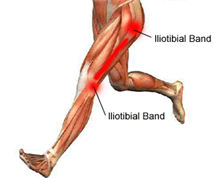
of pelvis, runs down the outer side of the thigh and connects to the shin bone.
ITBS is caused by repeated trauma rather than a specific incident. It occurs when there is repeated bending or straightening of the knee joint, the ITB can intrude on the lateral epicondyle (the widest point of the thigh bone around knee joint), causes tightness, friction and inflammation of the ITB band.
Common symptoms of ITBS are sharp pain around the lateral epicondyle (the outer part of the knee), swelling over the outside of the knee, it presents during activity and settles during rest.
Some common causes of ITBS are:
- Weak hip and core muscles
- Poor foot arch control
- Worn out or unsuitable footwear
- Sudden increase in mileage for training
- Excessive hill training (particularly downhill)
Ice therapy can help to reduce inflammation in the tissues. Stretching the ITB and the muscles attached to it can reduce its tightness as well.
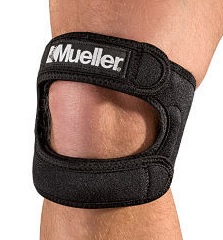
Mueller Max Knee Strap: designed to relieve pain on the outside of the knee, the strap provides upper, lower and side compression to combat pain and discomfort in the knee.
Mueller ITB Strap: A lightweight strap which helps relieve pain on the outer side of the knee, associated with ITB syndrome.
Aircast Knee Cryo Cuff with Cooler: Combines ice therapy and compression to relieve knee pain and swelling.
PATELLOFEMORAL PAIN SYNDROME
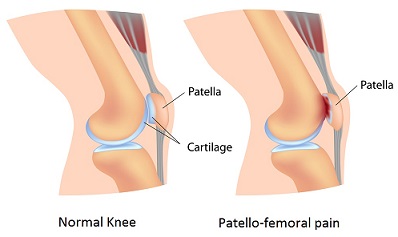
It is a pain in the front of the knee. When we bend or straighten our knees, the kneecap glides along the patellofemoral groove/ path on the thigh bone. The patellofemoral mal-tracking occurs when the kneecap straying from this path, this produces stress and pain behind the knee cap.
Patellofemoral pain syndrome may be caused by
overuse, injury, excess weight, mal-alignment of the kneecap (a.k.a. patellar tracking disorder), or changes under the kneecap.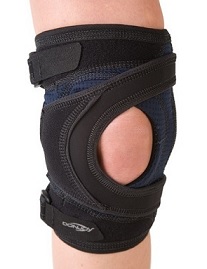
Ortholife CoolPro Adjustable Patella Support : Specially designed to stabilize the knee cap and to eliminate patellofemoral pain syndrome.
Donjoy Tru-Pull Lite Patella Stabilzer - Helps normalise patella tracking and reduce unwanted or excessive movement in the patella, hence reduces knee pain
Donjoy Reaction Knee Brace: Stabilises the patella by improving tracking and associated pain.
SHIN SPLINTS (MEDIAL TIBIAL STRESS SYNDROME)
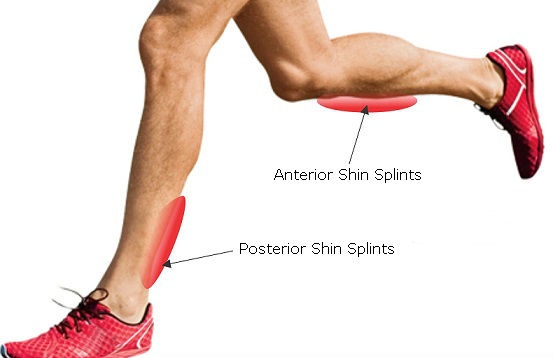
Shin Splints also known as Medial Tibial Stress Syndrome (MTSS), it refers to the shin pain during running and it occurs frequently in distance runners.
Shin splints are largely caused by over-use, and those who run regularly on hard or uneven surfaces are more likely to be affected. Pain is present on the inner border of the shin during and following exercise.
The symptoms of shin
splints are:
- pain and tenderness along the tibia
- potential swelling of the lower legs.
Resting, strengthening and stretching exercises are helpful in reducing shin pain.
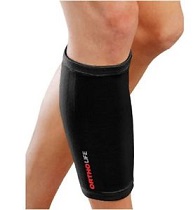
Ortholife Shin Brace: Relieves symptoms of shin splints through compression and firm contact.
Formthotics Classic Blue Dual Insoles (Medium Density) - Proven to ease the pain symptoms associated with shin splints.
Boost Compression Socks - apply a gentle and graduated compression which helps to increase blood circulation, enhances oxygen delivery, aids shin splints recovery as well as reducing toxins.
ACQUIRED FLAT FOOT (POSTERIOR TIBIAL PAIN)
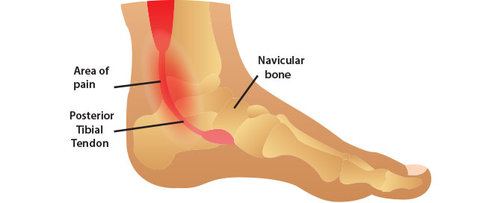
The posterior tibial tendon connects the calf muscle to the bones on the inside of the foot. It plays an important role to hold up the arch and support the foot when walking.
Acquired flat foot is an progressive flattening of the foot arch, it happens when the posterior tibial tendon becomes dysfunctional. This occurs more commonly in patients with existing flat foot problem due to other reasons.
As the arch becomes flatten, it places more stress on the posterior tibial tendon and the ligaments on the inside of the foot. As a result, progressive disorder of foot arch.
At the initial stage, pain and tenderness felt along the posterior tibial tendon behind the inside of the ankle (see image)
As the posterior tibial tendon progressively fails, it may bring deformity to the foot and ankle. The patient felt the pain on the inside of the ankle during movements.
Bio-Advanced Full Length Orthotics – Low Density Insoles: provides contoured arch support to control over
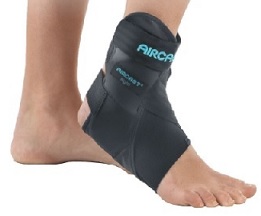
pronation.
Aircast Flat Foot Airlift PTTD Ankle Brace: Ideal for the treatment of the acquired flat foot. Lifts the arch of the foot, relieving pressure on it.
Resistance Tube Band (5 different resistance levels) : To be used for progressive strength exercises during rehab from tibial posterior tendon dysfunction problems.
Click here for Part 1 and Part 3 of Common Running Injuries & Treatments.
The information above is general in nature and is only intended to provide a summary of the subject matter covered. It is not a substitute for medical advice and you should always consult a trained professional practising in the area of sports medicine in relation to any injury. You use or rely on the information above at your own risk and no party involved in the production of this resource accepts any responsibility for the information contained within it or your use of that information.